

MEDICAL UNIVERSITY GRAZ CASE STUDY

.



Commercial kitchens are notorious for their high energy consumption and significant energy waste. To address these challenges, the Medical University of Graz in Austria undertook a project to improve energy efficiency in its commercial kitchen facilities. This case study delves into the installation of Intelli-Hood®'s Demand Control Kitchen Ventilation (DCKV) system, which harnesses dual sensing technology to modulate kitchen fan speed based on real-time cooking demand.
Overview
Intelli-Hood®'s DCKV system is designed to revolutionize kitchen ventilation by dynamically adjusting fan speeds in response to cooking activity. Utilising smart technology, it incorporates temperature and optical sensors to continuously monitor heat and smoke levels in the kitchen environment. This real-time data allows the system to optimise ventilation speeds, ensuring efficient energy usage while maintaining a safe and comfortable kitchen atmosphere
The installation process at the Medical University of Graz was meticulously planned to minimise downtime and disruptions to daily operations. Prior to installation, a comprehensive assessment of the existing kitchen infrastructure was conducted to determine the optimal placement of sensors and ventilation equipment. Collaboration with kitchen staff and facility management was essential to ensure seamless integration with existing workflows. Installation was scheduled during off-peak hours to minimise disruption to staff and students.
Implementation
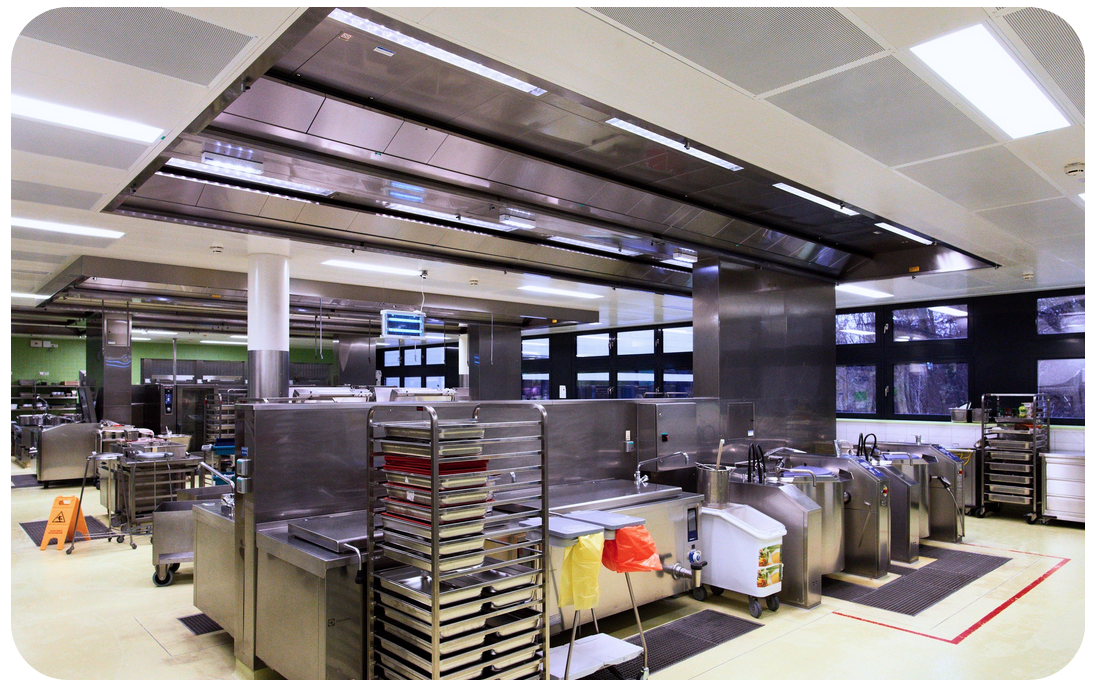
Medical University Graz Campus Kitchen
Following the installation of Intelli-Hood®'s DCKV system, the Medical University of Graz experienced significant improvements in energy efficiency and cost savings.
Utility Costs: Prior to installation, the annual utility cost for kitchen operations stood at £45,766. Post-installation, there was a substantial reduction in energy consumption, with the utility cost dropping to £15,092 per year, resulting in (Figure A). Furthermore, the university achieved a remarkable 68% reduction in operational expenses, demonstrating the system's efficacy in optimising energy usage.
Additionally, the implementation of Intelli-Hood® contributed to a significant reduction in the university's overall carbon footprint. By reducing carbon emissions and minimizing energy waste in the commercial kitchen, the university achieved annual carbon savings of 206,556 lbs.
Fan Speed Profile: The average fan speed of 51% (Figure B) reflects the system's ability to adapt ventilation rates according to cooking demand, further enhancing energy efficiency and reducing operating costs. The commercial kitchen’s fan speed adjusted to cooking demand, thus helping optimise the kitchen’s performance and reduce energy waste.
Performance
Annual Kitchen Hood Utility Costs (GBP)
Figure A
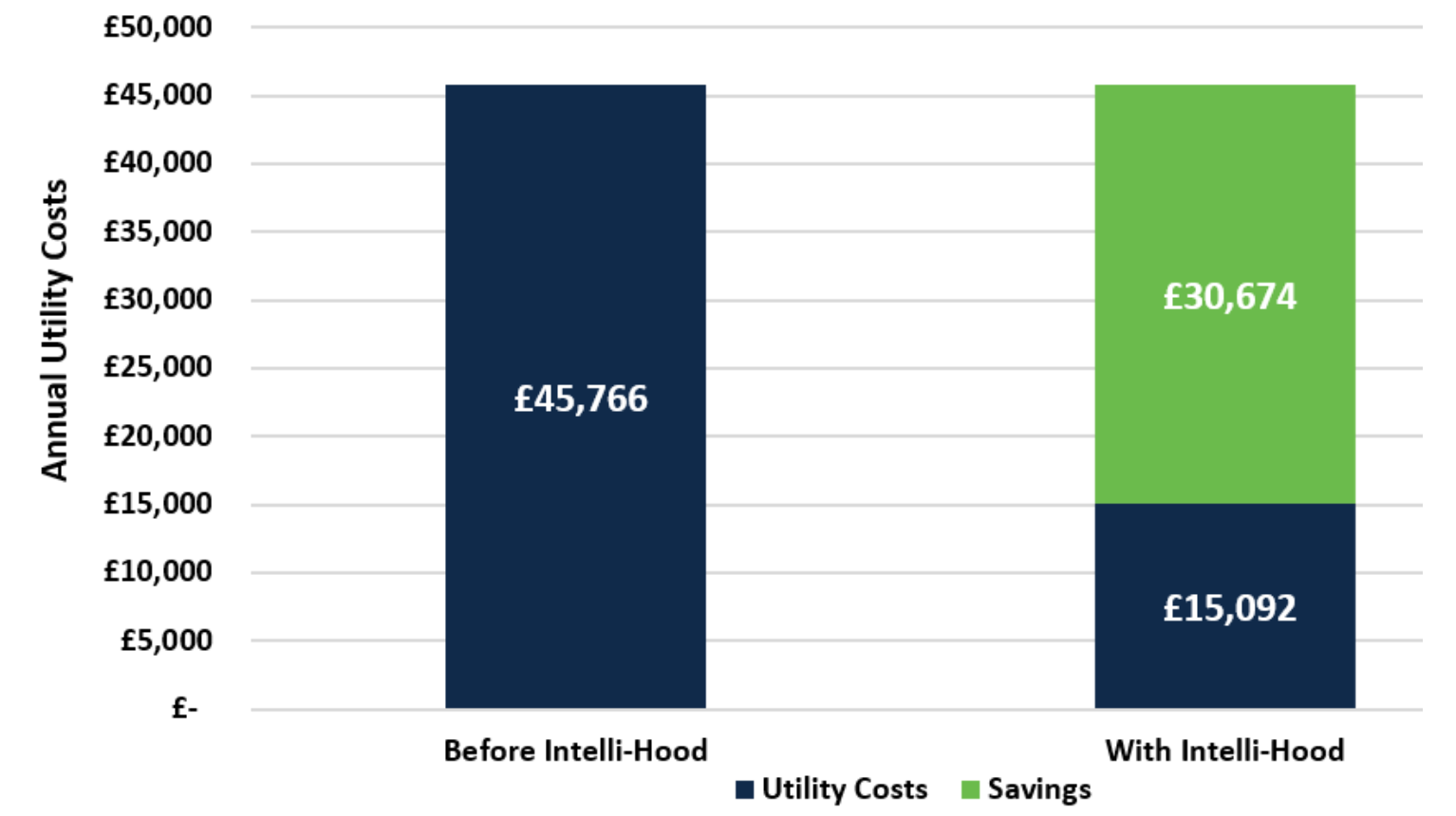
Figure A compares the annual utility costs prior to Intelli-Hood®’s installation vs. after. The graph highlights the savings achieved by Intelli-Hood®’s DCKV installation.
Disclaimer: This installation was conducted by a local distributing partner of Intelli-Hood. For any questions or more info regarding this installation, please contact the Melink Corporation.
Med Campus Fan Speed Profile
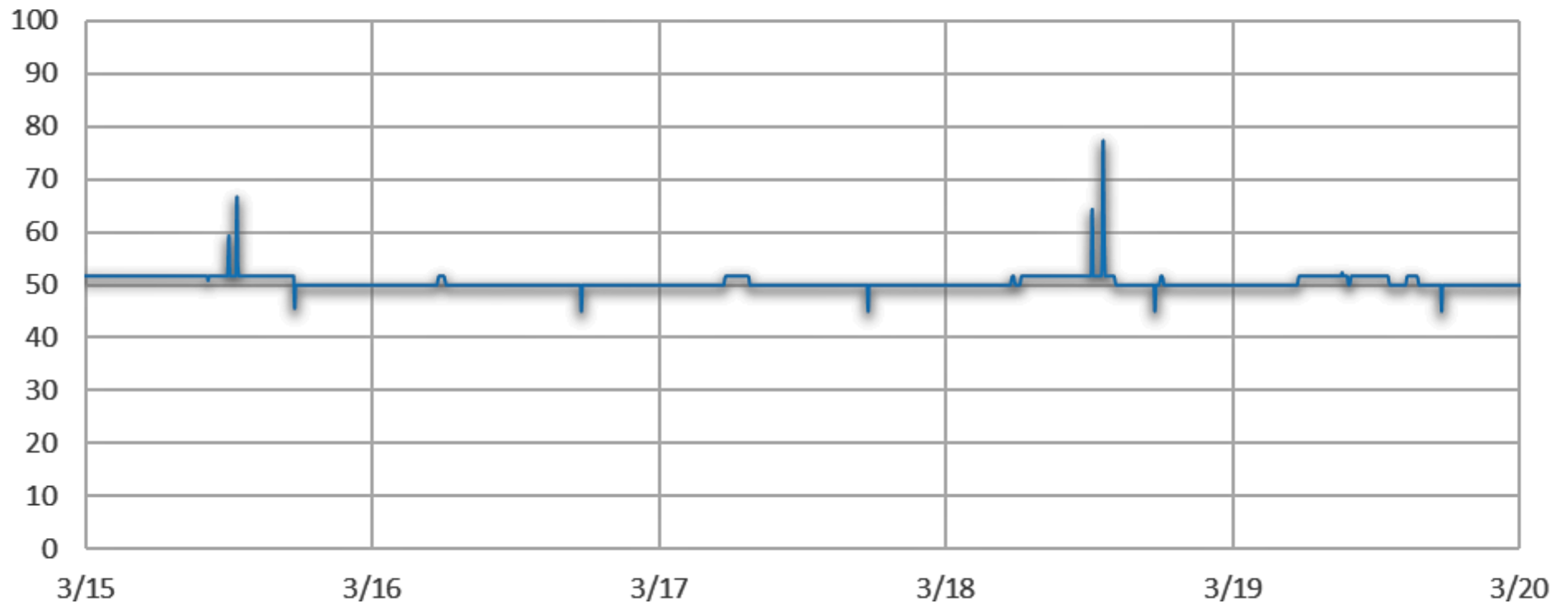
Figure B
Figure B depicts the hotel’s commercial fan speed profile over the course of six days. The average was 60%. The spikes in the fan speed represent the increase of cooking demand and the dips represent the decrease of cooking demand.
The installation of DCKV controls at the Medical University of Graz has yielded substantial benefits in terms of energy efficiency, cost savings, and environmental impact reduction.
This case study underscores the importance of adopting innovative solutions like Intelli-Hood® to enhance energy efficiency and mitigate environmental impact in commercial kitchen environments. The success of this installation project serves as a testament to the effectiveness of smart technology in achieving sustainable operational practices.
Conclusion