
Why Your Kitchen Ventilation Could Be Costing You More Than You Think
Energy costs remain high and unpredictable for UK hospitality, making it harder for businesses to plan ahead and protect margins.
For many businesses, the focus has shifted to one straightforward question:
Where can we reduce costs quickly, and what’s the return?
One of the biggest opportunities sits in the kitchen.
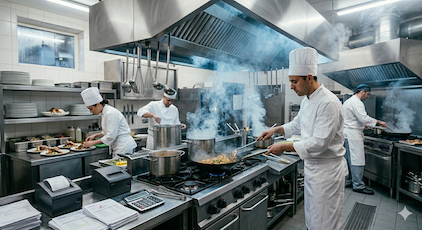
Commercial kitchens are built for peak demand. But they don’t run at peak all day.
They move through prep, service and quieter periods. Yet in many sites, ventilation systems continue to run at full speed from open to close.
That means energy is being used when it simply isn’t needed.
A practical route to fast ROI
The good news is that better performance doesn’t always require a full system replacement.
In many cases, existing kitchen ventilation systems can be upgraded through retrofit solutions, delivering measurable savings with a clear return.
ROI can often be achieved in as little as 12 to 18 months, depending on the site
Fan energy savings are typically 30-50%, with higher savings possible
Additional savings can come from reduced heating and cooling demand
Over the life of a system, often 10 years or more, this can represent a strong return relative to the initial investment.
By adding sensors and intelligent controls, airflow responds to real cooking activity rather than running at a fixed rate.
Lower activity means reduced fan speeds
Higher activity and the system responds automatically
Why ventilation has a wider impact
Ventilation doesn’t just affect fan energy.
Every time air is extracted from the kitchen, it needs to be replaced. That replacement air often needs heating or cooling, which adds demand on wider building systems.
Fan energy is only part of the picture
Heating and cooling loads rise with airflow
The overall impact is often underestimated
Improving how ventilation operates can reduce this combined load, and that is often where a significant portion of the savings comes from.
Visibility across single and multi-site operations
Alongside better control, there is a growing need for visibility.
Customers want to understand how their kitchens are actually performing, not just assume everything is running as it should be.
With systems like Intelli-Hood in place, this can include:
Live and historical fan speed data
Energy usage trends over time
Performance comparison across multiple sites
Clear reporting to support cost and carbon tracking
For multi-site operations, this makes it much easier to identify inefficiencies and manage performance across an entire estate.
A more practical approach
Rising energy costs are a real challenge, but they are also creating an opportunity to take a more considered approach to how kitchens operate. For most sites, the goal isn’t to reduce output. It’s to reduce waste, improve control, and make better use of what’s already in place.
If you’re reviewing energy use across your kitchens, it’s worth taking a closer look at how your ventilation systems are running today.
If you’d like to explore this further, contact us to arrange a free site survey.